
1 of 4 · Observe & Empathize
Ocean Habitat Changes Lesson
Big idea: As water warms, habitats change — and animals must adapt.
🔍 Observe ocean habitats → 🧪 Analyze shifts → 💌 Write a leader
🍎 Tip: Try a sensory bin + sentence frames.
Same trusted format as our COP28 guide — big idea, classroom steps, teacher tips — now with 4 scientist-reviewed ocean lessons, from K–2 habitat letters to 6–12 carbon solutions.
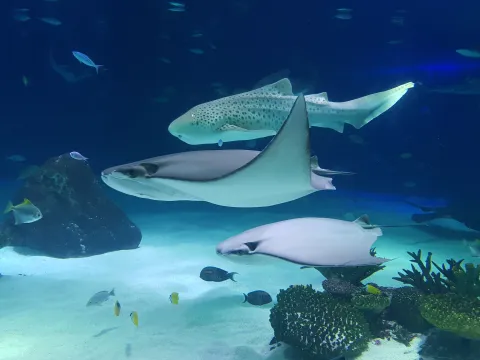
The ocean covers 71% of Earth and shelters most life. When habitats shift, animals must move, adapt, or struggle — starting here makes climate tangible and hopeful.
1 of 4 · Observe & Empathize
Big idea: As water warms, habitats change — and animals must adapt.

2 of 4 · Story to Solution
Big idea: Hatchlings face plastic, lights, and warming beaches — young engineers can help.
3 of 4 · Art + Listening
Big idea: Travel it, draw it, and listen to it to love it.
4 of 4 · Chemistry in Action
Big idea: Can we give the ocean “TUMS” to cut acidity + store carbon?
Tap an answer — score 0/3 and earn your badge!
My 3 picks from News for Students (SubjectToClimate × The Juice, differentiated for grades 5–12 with quizzes). Use as warm-ups alongside the lessons.

Oceans absorb extra heat, stressing corals to expel their algae. Students map causes → effects → recovery actions.
💬 Discuss: What helps a reef bounce back?
Find this story in Oceans ➜
Nest temperature decides hatchling sex — warming sands shift the balance. Students connect habitat data to conservation design.
💬 Discuss: How would you protect a nest?
Find this story in Oceans ➜
From mangroves to offshore wind to carbon storage, the ocean can help slow warming — if emissions fall too. Includes graph reading.
💬 Discuss: Hope or hype — what convinces you?
Find this story in Oceans ➜Ocean Habitat Changes (K–2), Sea Turtle Conservation (K–2), and the Ocean Biodiversity Activity Guide (K–2) from SubjectToClimate. Each is scientist-reviewed, takes 60–90 minutes, and uses observation, read-aloud, drawing, listening, and simple engineering design.
Use TUMS for the Ocean? — a 2.5-minute Climate Central video + article on alkalinity projects in the Gulf of Maine and Washington. Pause at 0:48 to analyze the pH graph, run a T-chart, and connect to UN SDG 14 (Life Below Water). Pre-teach acidification with this intro.
K–2 lessons run 60–80 minutes (life science, civics, STEM) with slides, student documents, and standards included. The 6–12 video fits one period (chemistry, Earth science). All list NGSS alignment on their SubjectToClimate pages.
Yes — Habitats Mon, Turtles Tue, Biodiversity art Wed, TUMS video Thu, gallery + action Fri (cleanup, drain stenciling, or pledge wall). Pair older students as buddies for younger classes.
From a kindergarten letter to a high-school pH graph — one story at every age: the ocean is changing, life depends on it, and students can help.